
“Up, up, up past the Russel Motel
Up, up, up to the Heavyside Layer”
‘Cats’ T.S. Elliot
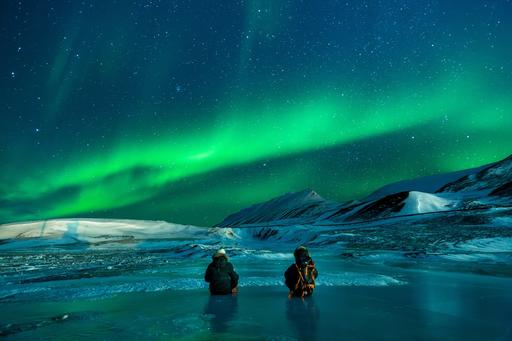
It was a fantastic aurora; the best that anyone could recall in decades. When the September 18, 1941 Great Aurora took the stage, it was seen in Virginia, Denver and St. Louis, but it was in New York City that it made itself distinctly unwelcome. From Central Park at 9:30 PM, pedestrians could plainly see several bright colored bands of light rivaling the full moon, in shades of orange, blue and green. Curtains, rays and flashing displays of light covered much of the sky throughout the rest of the night, giving New Yorkers a taste of what their northern relatives in Alaska see on a weekly schedule. The display had started before sunrise on Thursday, September 18 as thousands of commuters got up and had breakfast before dealing with another New York rush hour. This was a special day for other reasons as well. The Brooklyn Dodgers would be playing the Pittsburg Pirates, and Red Barber would be announcing the play-by-play activity over WOR radio. By 4:00 PM, the baseball teams were tied 0-0 when suddenly, and for an interminable 15 minutes, the broadcast on WOR radio was cut off by auroral interference. When the broadcast resumed, the Pirates had scored four runs! Dodger fans pounded the radio station switchboards by the thousands, hurling oaths and bad language. The radio station tried to explain that they were absolutely blameless, and that they should be cursing the auroral displays over their heads. Apparently calm reasoning did little good. No one really bought the idea that solar storms had raided the game.
NBC, meanwhile, was busy trying to resolve their own problems. They were scheduled to do a special inaugural broadcast to Mexico to open 23 new affiliate radio stations. Although the program could be easily heard in the United States, in Mexico the static and interference made the reception of the program impossible, although north-directed broadcasts from Mexico to the United States could be heard. Throughout most of Thursday, NBC and CBS short-wave transmissions were badly interrupted just about everywhere. RCA could no longer make connections with London directly, but they discovered that a new channel had opened up instead. By transmitting to Buenos Aires and then having the signal relayed to London along a 12,000-mile path, they could get a connection that was actually clearer than along the direct route. But the aurora were not quite finished with New York
The next day, after dazzling aurora washed the skies the evening before, New Yorkers were treated to a second amusing incident. At 11:45 AM, WAAT in New Jersey was broadcasting recorded songs by Bing Crosby when a conversation between two men interfered with portions of the music. Station engineers worked frantically to clear up the cross-talk problem but there wasn’t a whole lot they could do. Within a few minutes, the voices just as mysteriously disappeared, but not before callers from New Jersey complained by the hundreds on the station’s switchboards.
No sooner had this problem solved itself when the noon news broadcast was interrupted by a much louder conversation between two women. This time the discussion was about their blind dates, and the language they used was euphemistically noted by the newspapers as ‘spicy’. Again, the auroral conditions overhead had mixed a short-wave channel with the normal broadcast at nearly the same frequency. Many callers complained about the change in programming, which was being heard by young children. There were even a number of men who called WAAT to inquire about the women during this aurora-moderated dating hotline.
Because aurora, and the powerful electromagnetic forces that cause them, have a strong affinity for all things electrical, it is not surprising in retrospect, that every communications technology we have erected in the last 160 years has fallen victim to interference from these natural events.
Electrical currents were magical in many of the ways that they worked. For example, in 1820, Hans Oerstead a physicist at the University of Copenhagen could make electrical currents deflect compass needles. Meanwhile, across the English Channel, Michael Faraday uncovered an equally mysterious electrical phenomenon: If you move a magnet across a wire, it causes a current to flow in the wire. It’s hard to imagine the excitement these investigators must have felt as they saw electrical currents produce invisible magnetic forces and vice versa. Faraday’s discovery of changing magnetic fields producing electrical currents, combined with Alexander von Humbolt’s discovery that sudden changes in the Earth’s magnetism can occur in ‘magnetic storms’, provided the ingredients for an interesting natural experiment. All that was needed was a network of wires large enough to catch nature in the act of inducing currents. The 30,000 mile long telegraph network available in 1848 provided just the right technology for the experiment, and during the next few years, telegraphists caught much more that simply the dits and dahs they had bargained for. For a long time they had no clue what was going on in their wires.
During the aurora of November 17, 1848, the clicker of the telegraph connecting Florence and Piza remained stuck together as though it had become magnetized, even though the receiving apparatus was not in action at the time. This could only happen if an electric current from some outside source had flowed through the wires to energize the electromagnet. Telegraphers elsewhere also began to notice that their lines mysteriously picked up large voltages that caused their equipment to chatter as well, with no signal being sent. Much of this was soon attributed to the long wires picking up lightning discharges in their vicinity, and the solution was simply to erect lighting rods on the telegraph poles. American telegraphists had only a short time to puzzle over atmospheric electricity on their 1000-mile lines when in 1859, the Great Auroras of August 28 and September 4 blazed forth and lit up the skies of nearly every major city on the planet. It was one of the most remarkable displays ever seen in the United States up until that time, and its effects were simply wonderful.
These aurora were so exceptional that the American Journal of Science and Arts published no fewer than 158 accounts from around the world describing what the display looked like, the telegraphic disruptions they produced, and assorted theoretical speculations. Normal business transactions requiring telegraphic exchanges were completely shut down in the major world capitals. In France, telegraphic connections were disrupted as sparks literally flew from the long transmission lines. There were even some near-electrocutions. In one instance, Fredrick Royce a telegraph operator in Washington D.C reported that,
“During the auroral display, I was calling Richmond, and had one hand on the iron plate. Happening to lean towards the sounder, which is against the wall, my forehead grazed a ground wire. Immediately I received a very severe electric shock, which stunned me for an instant. An old man who was sitting facing me, and but a few feet distant, said he saw a spark of fire jump from my forehead to the shoulder. ”
While a silent battle was being waged between telegraphists and aurora, Alexander Graham Bell, in 1871, uttered the first telephonic sentence in his laboratory “Mr. Watson, come here. I want you”. In less than a year, the first toll-free, long-distance phone call was placed by Watson and Bell, between Cambridgeport and Boston, using borrowed telegraph lines. Meanwhile, as if to celebrate this event, the Great Aurora of February 4, 1872 colored the skies. Again, reports could be found in the newspapers and science journals of powerful voltages induced upon telegraph lines. During the November 17, 1882 Great Aurora, the telephone lines of the Metropolitan Telephone Company refused to work until after 2:00PM. Disruptions were also reported on the cables to Cuba and Mexico. The Chicago stock market was severely affected all day. By the time impacts were identified, it was already far too late to rethink the deployment of the technology. The impact that solar storms had on telegraph, telephone, and power lines was truly unexpected. By the time the famous September 1859 storm had lashed the Earth, telegraphy had already become a transcontinental reality, displacing the Pony Express with 30,000 miles of line strung up on trees and poles. Telephony was born 19 years later, but it took another 11 years for its vulnerability to be tested during the November 18, 1882 solar storm.
By 1901 there were over 855,000 telephones in service in the ‘Bell Telephone System’. It seemed as though the telephone industry had taken the country, and the world, by storm. Everyone wanted their own private line, and the only limiting factor in the spread of this technology was how quickly the Bell Telephone Company could cut down trees to make telephone poles, and wire your city block or town into the growing national circuitry. Today, the same public urgency exists in the cellular telephone market. Everyone wants their own cellular phone, and telecommunications companies can’t launch satellites fast enough to keep up with the demand.
No sooner had some considerable money been spent on wiring the world for telegraph and telephone, but a still newer technology appeared in full bloom from literally out of nowhere. Guillermo ‘William’ Marconi in 1895 tinkered together the first spark gap radio wave transmitter and receiver in the garden of his father’s estate. Instead of transmitting and receiving electrons flowing in a wire, it was the ‘wireless’ emission and reception of electromagnetic radiation that carried the messages. By 1905, there were over 100 wireless telegraph transmitters in the US with transmission ranges of 500 miles. There were also some seven million telephones in service on the same wires that once carried telegraphic messages.
So what did people do with this new technology? Many people sure didn’t use it very responsibly. Unlike the telephone or telegraph where the ends of the lines are geographically known, for wireless broadcasts, everyone is anonymous unless they choose to identify themselves. As Historian Edward Herron wrote in Miracle of the Air Waves: A history of radio
“..[Amateurs] thrilled to calls for help from sinking ships…and were not above creating synthetic excitement…sending out false messages that caused international distress, confusion, and waste of time and resources…Commercial stations depending on the dollar revenue from the dots and dashes, were constantly at war with the amateurs who rode ruthlessly into the same wavelengths, causing havoc with the commercial messages.”
This forerunner to modern computer ‘hacking’ was the main reason why the US Government had to step in and put an end to the unruly amateur broadcasts in 1917. Once World War I had concluded in 1919, the embargo was lifted, and the pace of radio technology research exploded like champagne out of a bottle. The first commercial radio station, KDKA, owned by Westinghouse opened for business on November 2, 1920 to a hungry crowd of over 30,000 amateur wireless operators who had cobbled together their receivers as home hobbyists. Two years later, there were 1.5 million sets in use, and by the end of the decade there were radio sets in 7,500,000 homes. This phenomenon had taken eight years to escalate to this level, while telephone service took 37 years to reach the same number of homes. Today’s stampede of people onto the Internet is only the most recent of many waves of colonization of new high-tech niches that have opened up during this century.
Most of the broadcasting during the 1920’s was done at long wavelengths, but by 1925 the Navy got involved with short-wave broadcasting because it could be received long distances with little interference, and could also be transmitted during the daytime, unlike the then-popular long wave transmissions. Wars are fought day and night, so there was tremendous pressure to push transmission technology to higher frequencies and shorter wavelengths where daytime ‘bounce’ was possible. Ironically, the short-wave radio frequencies would drive communication into the very domain that made then a victim of solar interference. Now, whenever aurora dominated the sky, and the Sun was throwing out flares like electromagnetic thunderbolts, their impacts would appear in many different guises, and across the entire spectrum of communications technology. By the time that solar cycle 17 began in 1933, 23 million homes (70% of total homes) had short-wave radio receivers, and Americans listened to nearly one billion hours each week of broadcasting. Television receivers operating in the newly conquered megacycle radio spectrum were already being field tested by several manufacturers and were expected to be available to the consumer within a few years. Short-wave interruptions were an increasingly common annoyance during daytime broadcasting, but their origins in distant solar flares were not recognized until 1937.
The Great Aurora of January 1938, March 1940, and February 1956 were seen in Europe and as far south as Sicily. British citizens in 1938 were dazzled by the biggest display they had seen in 50 years and thought London was aflame. Crowds in Vienna awaiting the birth of Princess Juliana’s baby cheered the January aurora as a lucky omen. Millions of Easter Sunday calls to Grandma in 1940 were halted between 10:00AM and 4:00PM on March 24. Even the Executive Curator of the Hayden Planetarium, William Barton, had to go on a nation-wide radio hookup to explain what was going on. The February 1956 Great Aurora included one of the most intense blasts of cosmic rays ever recorded by scientists up until that time. But while scientists and the public were being dazzled above ground, a far more urgent series of events was unfolding beneath the sea. A full-scale naval alarm had been raised for a British submarine, which was thought to have disappeared. The Acheron had been expected to report her position at 5:05 EST while on Arctic patrol. When it failed to do so, emergency rescue preparations were begun. Ships and rescue planes began the grim task of searching the deadly, ice cold waters between Iceland and Greenland, but no trace of flotsam or jetsam from the sub was ever seen. Then, the ‘missing’ submarine turned up four hours later when its transmissions were again picked up.
The February 10, 1958 Great Aurora colored the skies over Chicago and Boston in a dramatic spectacle that punctuated more earthly events. A terrible snow storm had paralyzed upstate New York, and another Redstone rocket had just been launched by the U.S Army. In a foretaste of what would become a common, and expensive, problem decades later, the Explorer 1 satellite launched two weeks earlier, suddenly lost its primary radio system. The geomagnetic activity knocked out telecommunications circuits all across Canada, and although it was not visible in the New York area, it was so brilliant over Europe it aroused fears of conflagrations. The Monday storm cut-off the United States from radio contact with the rest of the world following an afternoon of ‘jumpy connections’ that ended with a complete black out by 3:00 PM, although contact with South America seemed unaffected. By evening, radio messages to Europe could occasionally be sent and received.
Radio and TV viewers in the Boston area, however, were reportedly having their own amusing problems. For three hours, they fiddled with their TVs and radios as their sets went haywire, at times blanking out entirely, or changing stations erratically. Channel 7 viewers began getting Channel 7 broadcasts from Manchester Vermont, while Channel 4 viewers received ghostly blends of the local Boston station and one in Providence, Rhode Island. Viewers had just finished watching the ‘Lawrence Welk Show’ at 9:30 PM and were preparing to watch a nationally-broadcast TV movie ‘Meeting in Paris’ on Channel 4, or listen to a boxing match. What they hadn’t counted on was that they would get to do both at the same time. Jane Greer played the ex-wife who asks her former spouse, played by Rory Calhoon, to smuggle her new husband out of France. Instead, they discover ‘…that the old spark is still alive when the have a strange encounter in Paris’. During a passionate love scene, the audio portion of the movie was replaced by the blow-by-blow details of the boxing match:
“Smith gave him a left to the jaw and a short right hook to the button.
But darling we love each other so much.
A left hook to the jaw flattened Smith and he’s down for the count.
Kiss me again my sweet.”
The newspapers prior to 1958 made frequent mention of short-wave problems coinciding with aurora and magnetic storms. Often these problems were announced in banner headlines on page one. Today, we seldom hear of telephone or short-wave interruptions making any impact on us, at least not the way they used to. But yesterday’s communications mishaps are only the preludes to even wider, and more insidious, problems we now have to deal with in the most recent decade.

Submit your review | |